
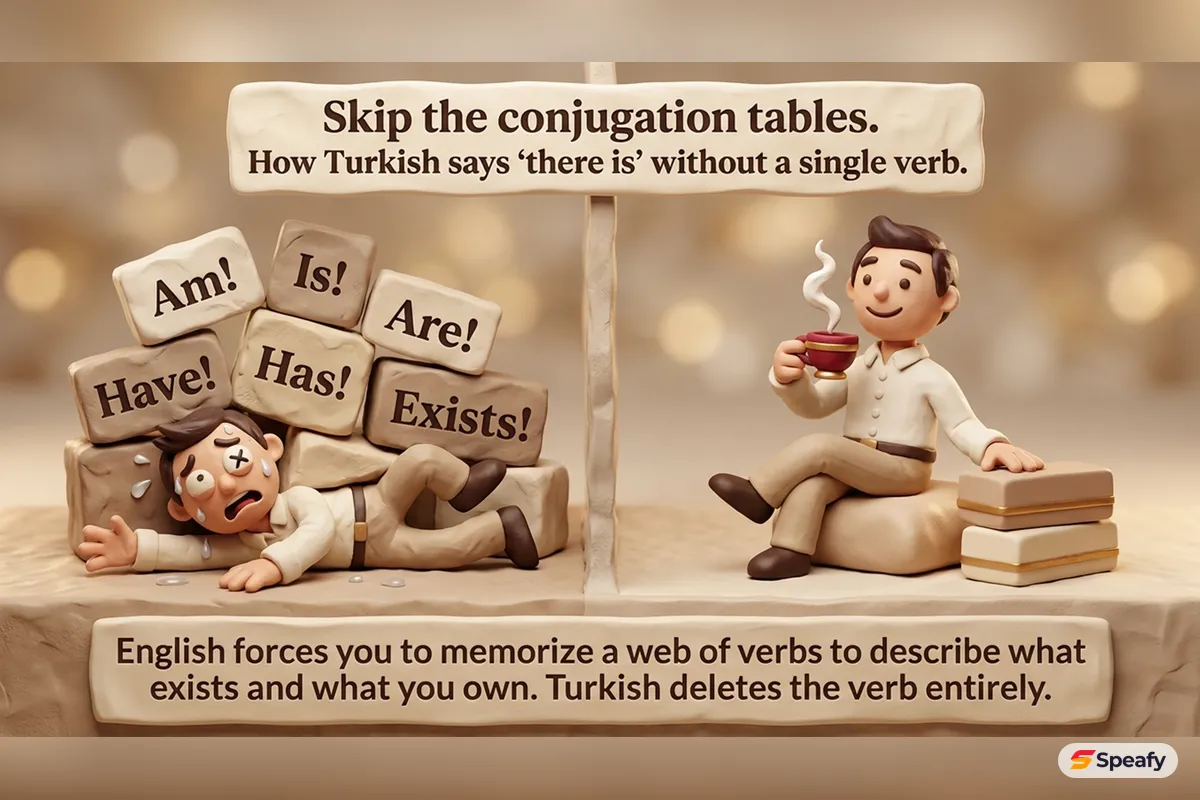
Var and Yok: How Turkish Says "There Is" (Without a Verb)
Learn one Turkish word today and you can already say whether the fridge has milk, the city has a metro, or your favorite café has wifi. That’s the whole point of var and yok — and once they click, you’ll reach for them constantly.
The rule
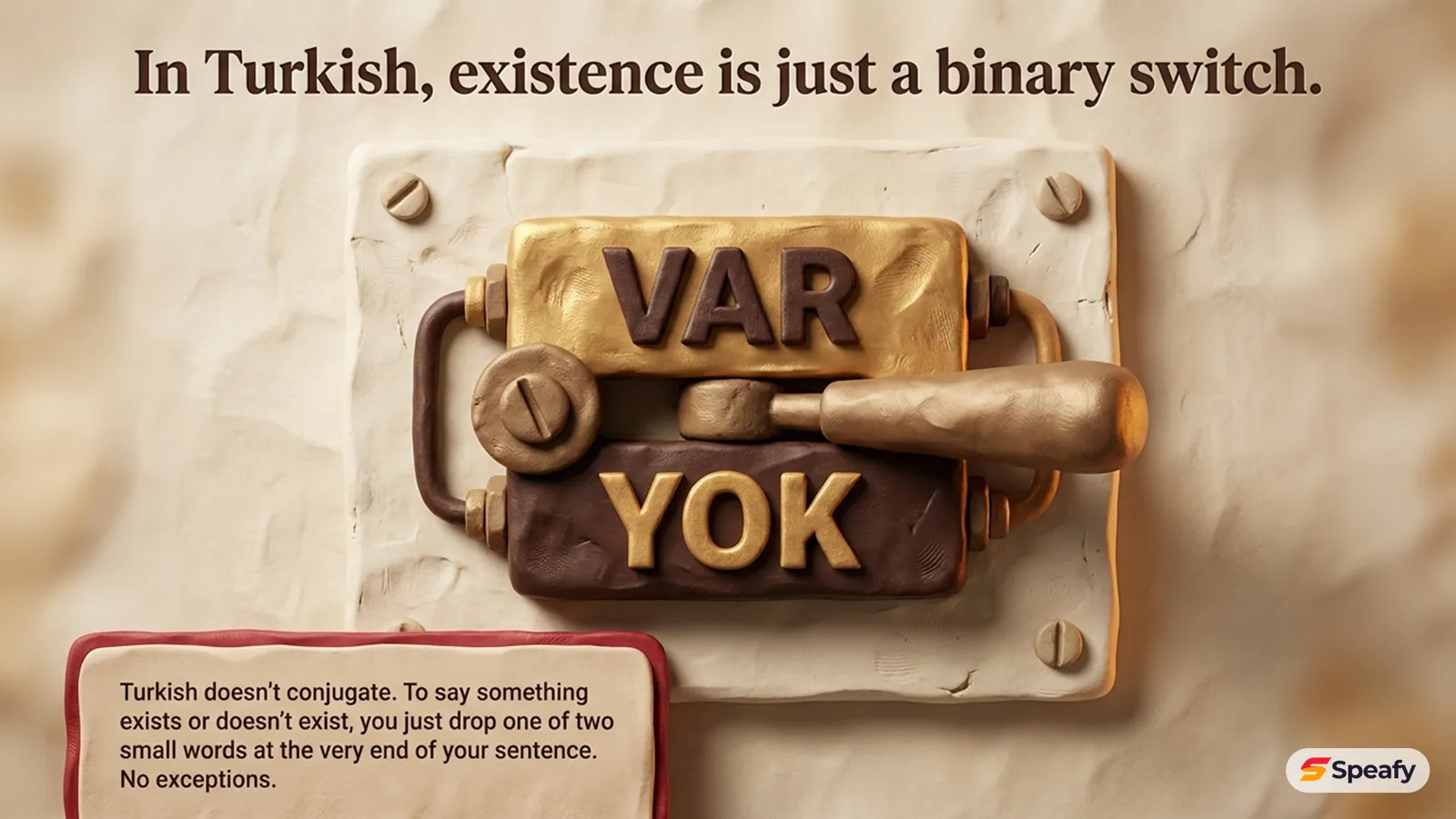
Turkish doesn’t have a verb for “to have” the way English does. Instead of conjugating anything, Turkish just states whether something exists or doesn’t, with one of two small words placed at the end of the sentence:
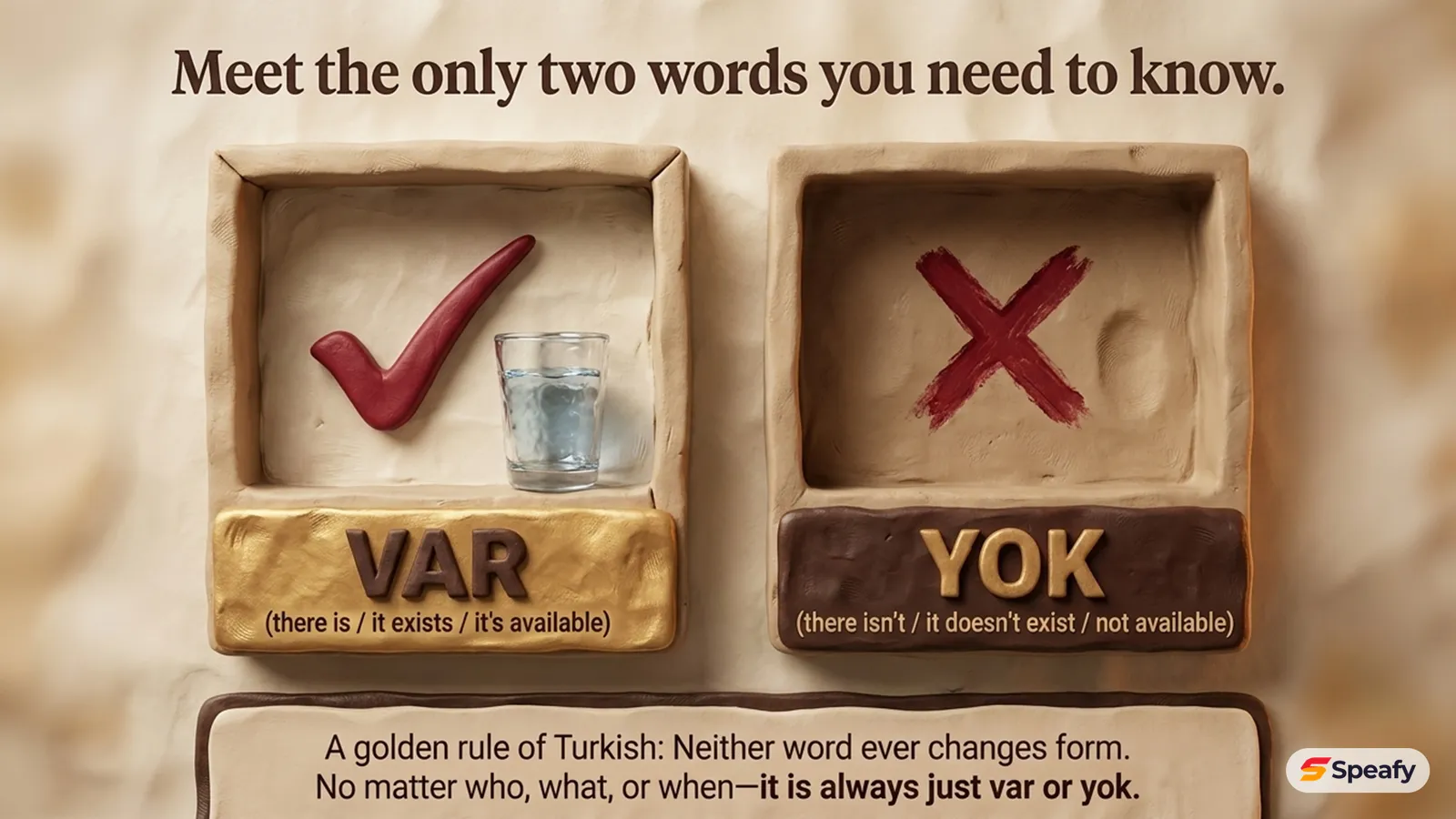
- var — there is / it exists / it’s available
- yok — there isn’t / it doesn’t exist / not available
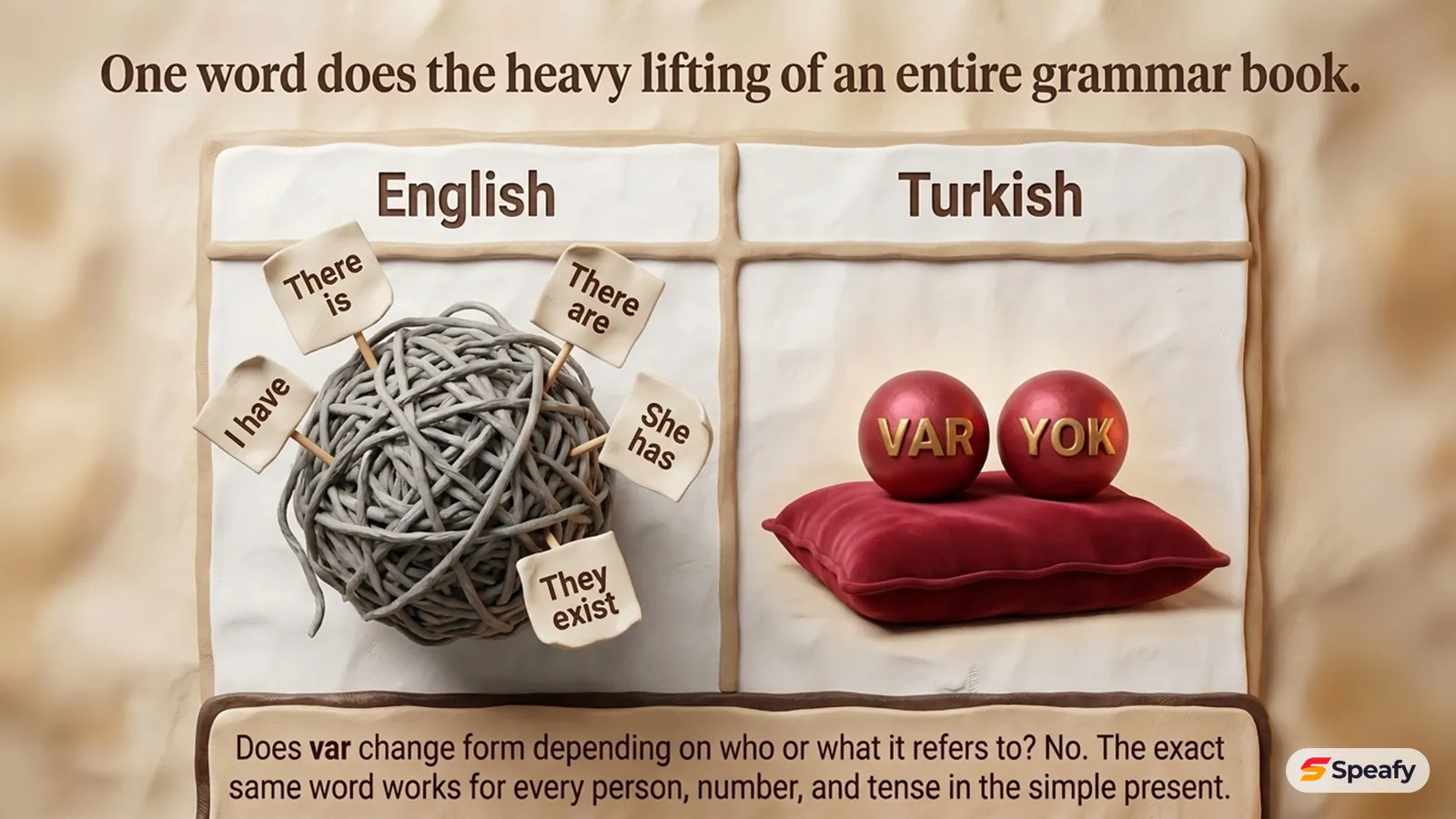
Neither word ever changes form. No matter who, what, or when — it’s always just var or yok.
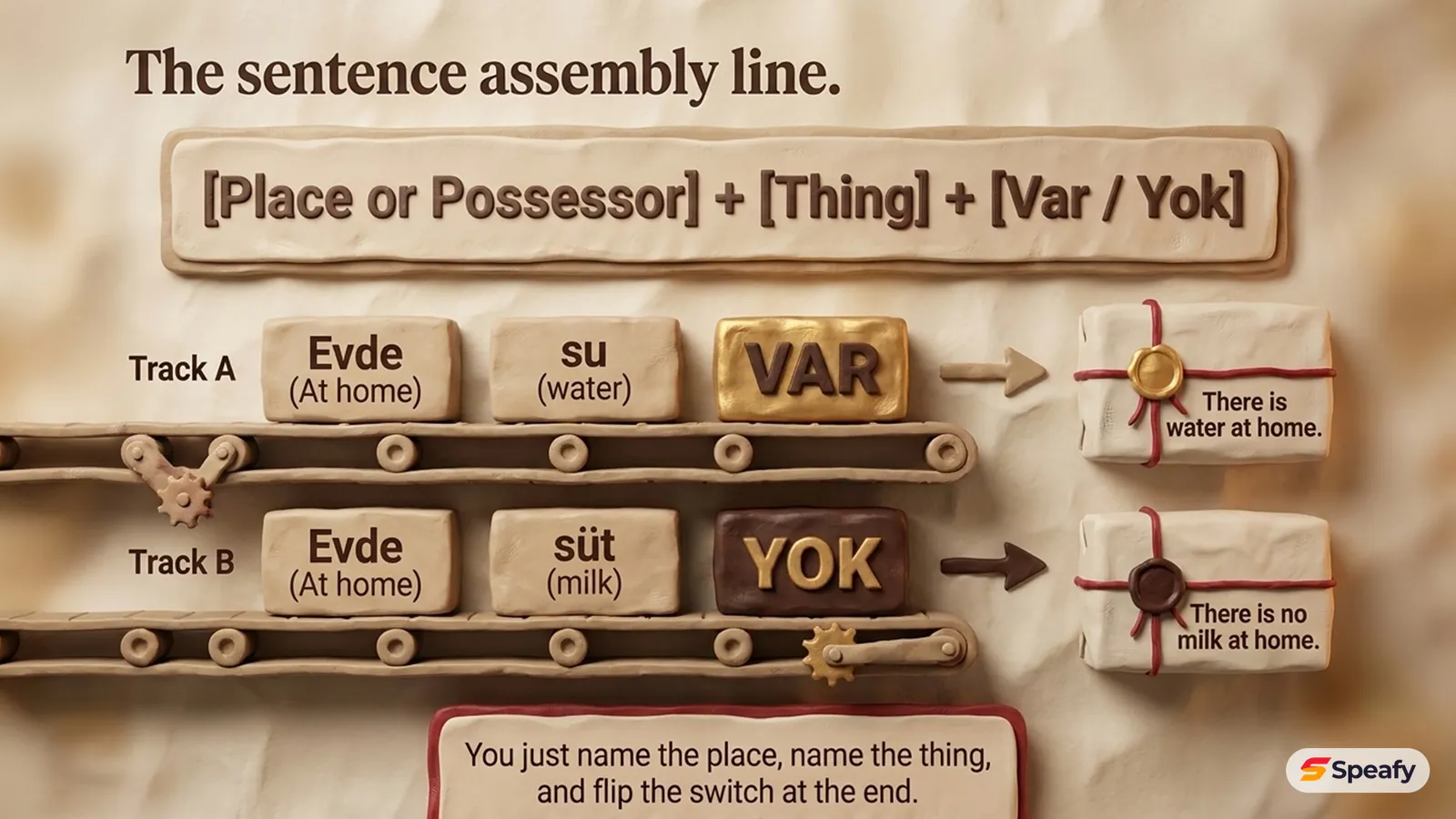
The pattern is: [place or possessor] + [thing] + var / yok
Examples
- Evde su var. — There is water at home.
- Evde süt yok. — There is no milk at home.
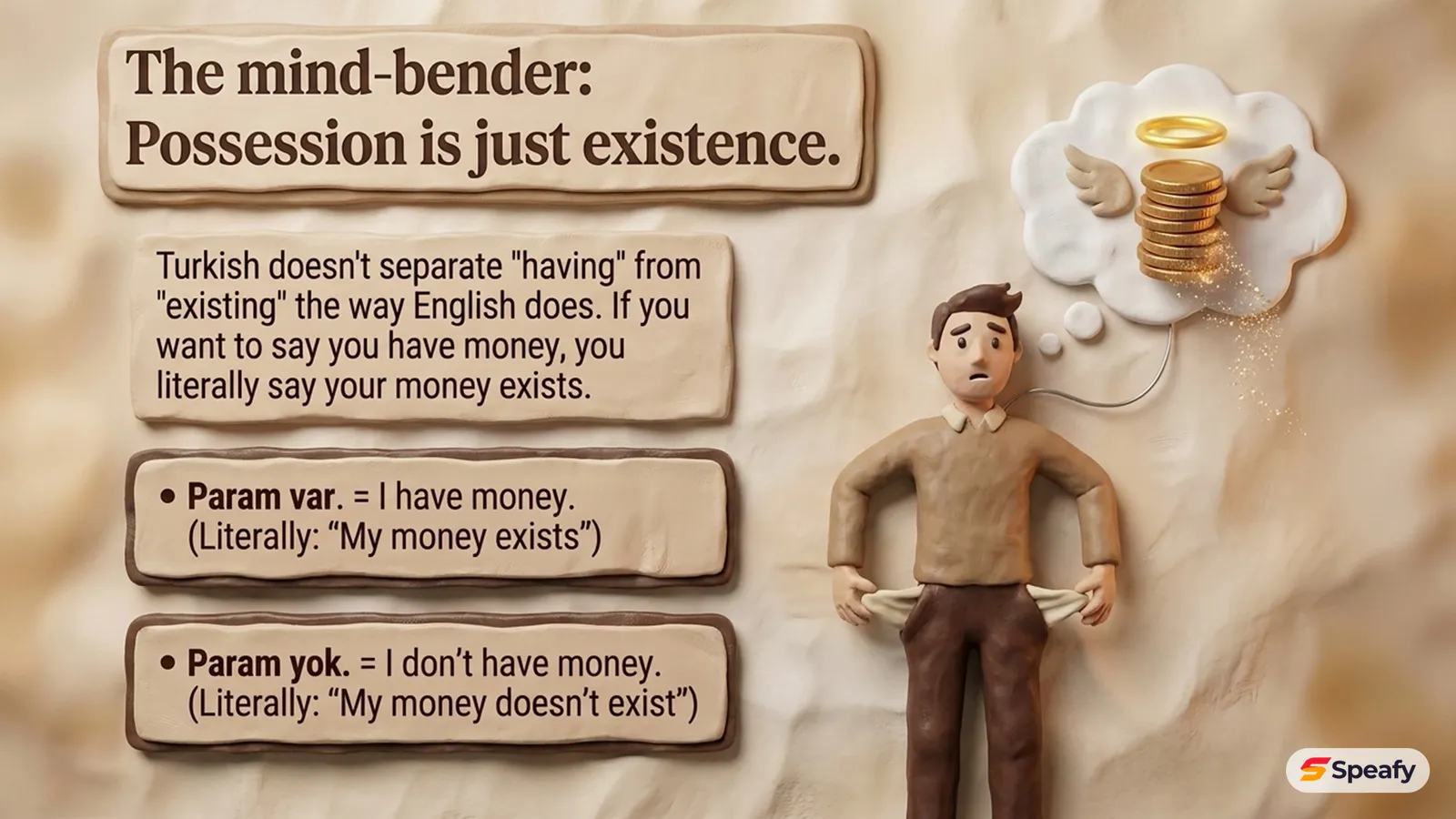
The same two words also cover possession, since Turkish doesn’t separate “having” from “existing” the way English does:
- Param var. — I have money. (literally: “my money exists”)
- Param yok. — I don’t have money.
That’s it — no conjugation table, no exceptions for this one. Once you’ve got var and yok, you can already talk about what’s around you and what you have.
Try it yourself
Babi, Speafy’s AI tutor, will drop var and yok into real conversation with you until they’re automatic — and Speafy’s FSRS-based flashcards make sure they actually stick, instead of fading a week later.
Frequently asked questions
How do I say "there is" in Turkish?
Use var — for example, "Evde su var" means "There is water at home." Var goes at the end of the sentence, after the thing that exists.
How do I say "there isn't" in Turkish?
Use yok instead of var — for example, "Param yok" means "I don't have money" (literally "my money doesn't exist").
Does var change form depending on who or what it refers to?
No — var and yok never conjugate. The same word works for every person, number, and tense in the simple present.